A little effort goes a long way in helping those who are less fortunate.
The cost of living in Northern Colorado is high, and it’s hitting working-class families where it hurts—with necessities like food, utilities and gas becoming unaffordable.
United Way reports that 35 percent of Weld County households and 33 percent of Larimer County households did not earn enough to cover the cost of living in 2024. Inflation and spikes in grocery and healthcare prices haven’t helped matters in the years since.
Food insecurity is growing across the region
Nicole Quinn, director of communications for United Way of Weld County, says 51 percent of Weld County children currently qualify for free or reduced-price school meals, an indicator of the financial pressure many families face.
“Food insecurity is a significant issue locally,” Quinn says. “Colorado Health Institute data found that as many as one in five people in Weld County and surrounding agricultural communities reported eating less than they felt they should because they couldn’t afford enough food.”
Kelsey Hammon, senior communications director for Food Bank for Larimer County, echoes that concern, saying food insecurity is up slightly from last year. Her organization provides food to community members in need through its scratch kitchen and mobile market.
Utility assistance is a top request
House of Neighborly Service in Loveland and Berthoud currently helps more than 6,000 individuals, a roughly 9 percent increase over last year. While food is the top reason clients seek assistance, utilities have moved up the list.
“In our area, utility costs have gone up about 30 percent this summer between the heat and cost increases,” says Cherri Houle, executive director. “It creates a heavy burden for seniors and families especially, many of whom were barely making it on the budget they had before.”
One of the organization’s missions is to prevent homelessness, and utility assistance is key.
“People have to have utilities,” Houle says. “If they lose them, they’re at risk of losing their house, and once that happens it’s an uphill climb.”
A childcare shortage makes it hard for parents to work
Another major challenge facing Northern Colorado families is the region’s lack of childcare. In Larimer County, available care can accommodate about 25 percent of the infant and toddler population, while Weld County covers just 15 percent, according to the Colorado Department of Early Childhood.
“Weld County is a childcare desert, being 10,000 seats short of the need we have,” Quinn says. “When parents can find it, the cost often keeps parents out of the work force.”
How families can help
Local nonprofits have been gearing up for the season of greatest need. Heating bills are climbing, people experiencing homelessness need shelter as temperatures drop, children need winter clothing and snow boots, and families are scrambling to cover holiday expenses.
Fortunately, there are plenty of ways for families to help, from donating food and clothing to volunteering together.
Give, collect or volunteer at your local food bank
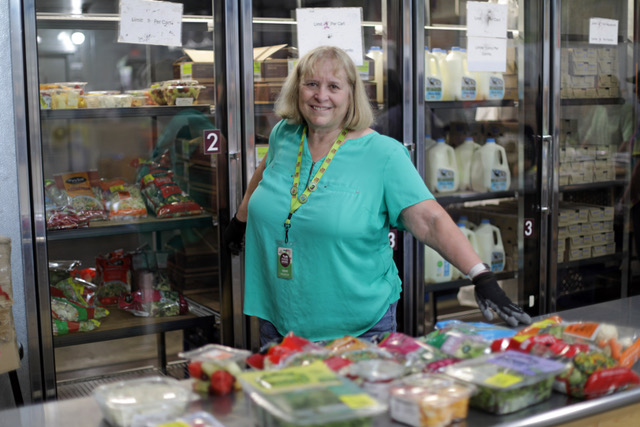
Families can volunteer together by preparing scratch meals at Food Bank for Larimer County’s nutritious kitchen, sorting produce, or distributing food to the community via the mobile markets.
“When you volunteer together you have a chance to directly see the impact your time is making,” Hammon says. “There’s so much gratitude for our volunteers from our community.”
The food bank also encourages food drives—a great option for involving kids in giving back. Their website lists most needed items along with information on hosting a drive.
Hammon says the greatest need right now is financial support.
“Tax deductible donations can be made online at foodbanklarimer.org and for every $1 donated, we are able to turn that into two meals,” she says.
Time, talent or treasure: Everyone has something to give at House of Neighborly Service
Food donations make a big difference at House of Neighborly Service in Loveland and Berthoud. Cheryl Wong, director of communications and development, says they’re also a great way to involve kids.
“Let them pick out their favorite soups or cereals and keep one, then buy another for a child in need,” she suggests.
Hosting a food, clothing or household-item drive in your neighborhood or a group you belong to is another way to get kids excited about giving.
“Think about what your family’s needs are, and what you’d need most if you were in crisis,” Wong says.
The organization also hosts a holiday store where families can volunteer together. Parents and guardians can shop for free, donated gifts for their children.
Financial donations are always welcome, too. Wong encourages families to host a lemonade stand or bake sale to benefit the organization, giving kids a hands-on role in fundraising. A full list of volunteer and giving opportunities is available online at honservice.org.
“Everyone has something to give—time, talent or treasure,” Wong says. “Think about what you have to offer others. For children, that could be handwritten notes or a cheerful picture drawn to put in food baskets—anything to provide encouragement.”
United Way follows the need where it’s greatest
United Way tracks community needs and works with local organizations to direct resources where they’re needed most.
Right now, Quinn says the greatest needs include nonperishable food, rent and utility assistance, household essentials, feminine products, emergency resources, warm clothing and undergarments, diapers and wipes, children’s books and childcare assistance. People experiencing homelessness specifically request hygiene supplies, warm clothing, undergarments and food.
Families can host collection drives, with United Way providing a collection bin and promotional materials and picking up donated items afterward.
Volunteers are also needed to help people navigate available services, staff the diaper bank and assist with community events. Opportunities are available at unitedway-weld.org.
Financial donations made through the website go wherever the need is greatest.
The need is great, and anything helps
Over the last five years, Houle says House of Neighborly Service in Loveland and Berthoud has increased the services it provides by 200 percent. While the number of people served has also increased, this figure represents an overall rise in the amount of assistance people need.
Hammon sees the same trend at Food Bank for Larimer County.
“The cost of living continues to go up, and that creates a really difficult situation for working families,” she says. “They’re having to choose between their mortgage, medical bills, utilities, food, and trying to save money for gifts for the holidays. We welcome anyone with anything to give to jump in and do so—it makes such a difference.”